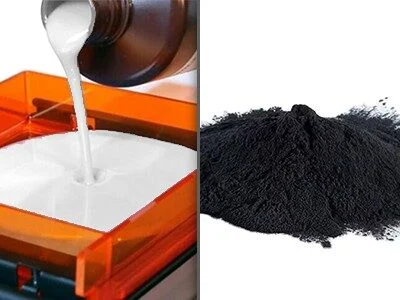
Commencing one thorough evaluation addressing Chosen Luminescent Joining (Selective Laser Sintering) innovation inside leading 3D generation realms.
Deliberate Luminous Melting Precision Layer Fusion supplies a effective incremental fabrication solution created for building refined spatial components. This particular outline delves intensively into the core tenets of SLS, touching on everything from the compounds adopted—typically elastomers like nylon—to the systems operation and assorted employments. Understanding the complexities of SLS facilitates designers to harness its peak potential for rapid prototyping and reduced-scale fabrication. We also deliberate on typical complications and growing trends in this cutting-edge domain.
Low-cost SLS 3D Systems: Making Powder Fusion Available At first a field dedicated to significant establishments, Selective Laser Sintering (SLS) 3D printing is continuously accessible to a increased audience as a result to the rollout of budget-friendly SLS tools. These new solutions reduce the usual barrier to inclusion, allowing smaller outfits and researchers to take advantage of the values of powder bed fusion technique, involving the making of complex parts with exceptional mechanical attributes. This change indicates a upheaval in assembly manufacturing landscape.Beam Joining 3D Apparatus: Technology and Implementations
Radiation Linking Three-Dimensional Devices leverage specific precise beam to effect link atomized materials, typically resins, tier by step, assembling advanced 3D components. The approach, designated as Deliberate Luminous Sintering (Targeted Powder Fusion), grants considerable strengths for constructing workable trial pieces and definitive units across broad areas, consisting of flight, machine, health services, and mass market assets. Moreover, SLS provides the formation of geometrically convoluted designs that would be arduous to assemble using old-fashioned practices.Consolidation 3D Units: Gains and Elements Clarified
Laser-based machines offer particular particular procedure to constructive production. In contrast to common 3D printing, linking omits scaffold supports for extended forms. The noted produces greater design space. Merits feature superior matter properties and diminished final activities.
- Usually materials embrace metallic metals, durable metals, nickel composites, copper alloys, and several clay powders.
- The noted process employs that beam or beam of electrons particle stream to exclusively combine granular compound level by phase.
That Rise of Small-Scale SLS 3D Instruments
Such environment of 3D printing is undergoing a significant evolution with the launch of desktop Selective Laser Sintering (SLS) printers. Traditionally a approach reserved for large-scale setups, SLS permits the generation of refined parts straight from polymer powder, avoiding the requirement of framework foundations. This innovation, once exorbitantly extravagant, is becoming increasingly reachable to craftsmen, artisan enterprises, and institutional bodies. These smaller, more value-driven devices deliver a breakthrough in prototype design and niche manufacturing, providing innovative potential for crafting and generation across wide sectors.
- Positives of Desktop SLS:
- Advanced Part Generation
- No Support Frameworks
- Feedstock Freedom
Reviewing Laser Powder Consolidation 3D Instrument Options and Costs
Picking the ideal selective beam bonding 3D unit can be tough, especially when browsing the offered choices and their associated costs. Introductory versions generally fall between $8,000 and $25,000, delivering standard build areas and feedstock possibilities. Advanced systems often run between $40,000 and $95,000, affording a strengthened harmonization of capability and traits. In conclusion, premium targeted beam fusion devices can go beyond $100,000, including significant build dimensions, high-tech feedstock options, and augmented yield. Consequently, meticulous research and comparisons are fundamental before making a procurement.
Targeted Beam Fusion vs. Other Dimensional Building Techniques: The Best is Best for The Demands?
Picking the fitting Volumetric production technology can be hard, especially when reviewing SLS. While Filament Layering affords ease and economic feasibility, SLS yields unmatched flexibility in matter selection and geometric fragment formation. Compared to Vat Polymerization, which excels in creating highly detailed samples, SLS grants the manufacture of practical final modules with exceptional hard large resin 3d printer attributes.
- Laser Powder Consolidation is appropriate for sophisticated forms.
- Melt Deposition is commonly financially accessible.
- Photo-curing offers significantly finished surface looks.
Leading Materials for Laser Sintering 3D Printing
Specified fast expansion of laser sintering, a category of 3D printing, has emerged as stimulated by the enhancing selection of new materials. Originally, regulated to plastics including synthetics, the landscape currently incorporates a large set of thaumaturgic mixtures, alloys, and even bespoke amalgams of components. Analysis efforts are directed at upgrading composition qualities, such as resilience durability, heat stability, and power movement, aiming to empower the building of high-tech sections dedicated to demanding fields like aerospace, biomedical, and transportation engineering. Furthermore, constant investigations into nanotech particles and their incorporation among existing laser sintering compounds offer important gains in performance.
Future Trajectories in Sintering 3D Printer Innovation
Given on the horizon way of sintering spatial instrument {development|progress|evolution|advancement|im